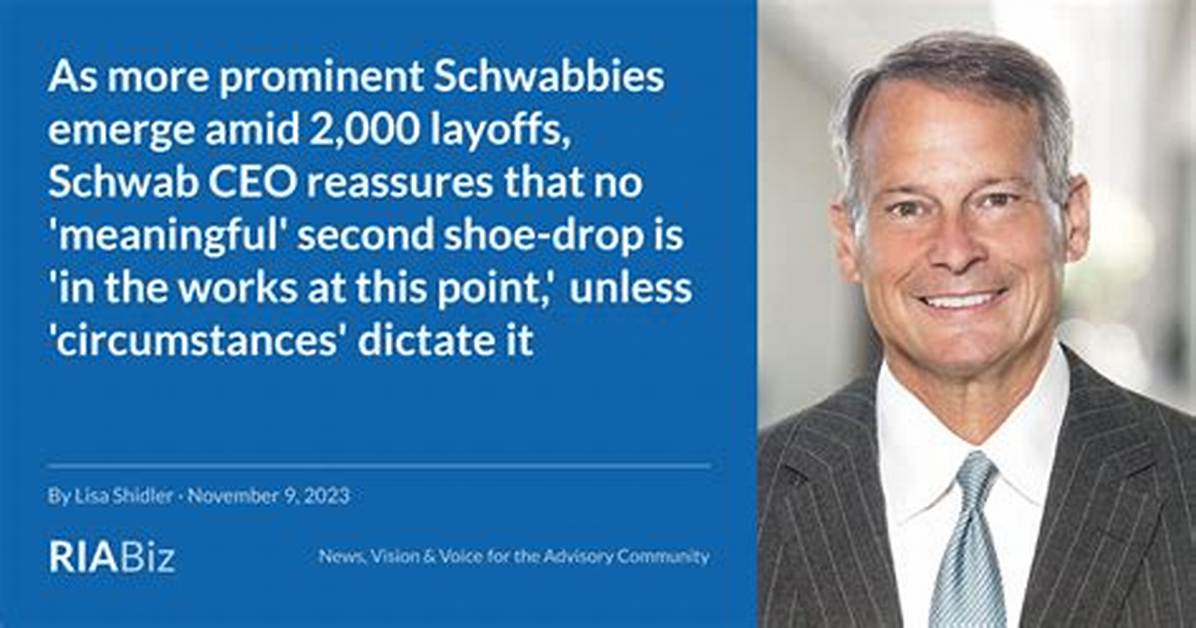
Charles Schwab, one of the leading financial services firms, has recently announced layoffs, impacting approximately 2,000 employees. These job cuts are part of the company’s strategy to reduce costs and improve efficiency amidst a changing market landscape.
As Schwab aims to achieve at least $500 million in annual cost savings, it has made the difficult decision to implement these layoffs. By streamlining operations and optimizing resources, the company aims to enhance its long-term competitiveness and ensure sustainable growth in the face of challenges and evolving customer demands.
Key Takeaways:
- Charles Schwab has announced layoffs, impacting around 2,000 employees.
- The job cuts are part of an overall strategy to cut costs and increase efficiency.
- Schwab aims to achieve at least $500 million in annual cost savings.
- The company’s net income for the third quarter of 2023 was $1.1 billion, down from $2.0 billion in the same period last year.
- Investor confidence in Schwab remains relatively strong.
Charles Schwab Layoffs – Impact on the Industry
The recent layoffs at Charles Schwab have raised concerns within the financial industry. As one of the largest brokerage and wealth management advisory service providers, Schwab’s actions may shed light on broader trends in the market. These job cuts come at a time when Schwab is facing challenges such as high interest rates and a shift in customer preferences towards money market funds.
The impact of Schwab’s cost-reduction measures extends beyond the company itself. It creates a ripple effect that can be felt throughout the industry. With layoffs of this magnitude, other firms may also reevaluate their workforce and consider similar actions. This could lead to increased competition for job opportunities within the industry.
Despite the negative implications, these job cuts are a strategic move by Schwab to maintain competitiveness and efficiency in the long term. By taking proactive steps to reduce costs, Schwab aims to streamline its operations and improve its financial performance. The company’s ultimate goal is to deliver optimal value to its clients and shareholders.
The Challenges Faced by Schwab
- High interest rates: The current economic environment, characterized by rising interest rates, has led to challenges for Schwab and other financial firms. Higher rates can impact the demand for brokerage services as investors seek alternative investment options.
- Shift to money market funds: Customers’ preference for money market funds over traditional brokerage accounts poses a challenge for Schwab. This shift may have prompted the company to reassess its workforce and strategic priorities to align with evolving customer needs.
“The layoffs at Charles Schwab reflect the company’s commitment to adapt to changing market conditions and ensure long-term competitiveness.”
– Industry Analyst
| Financial Implications | Industry Reactions |
|---|---|
| The layoffs are expected to generate annual cost savings of at least $500 million for Schwab. | The news of the layoffs has led to mixed reactions within the industry. Some analysts view it as a necessary move to optimize performance, while others express concerns about the potential impact on employee morale. |
| Despite the layoffs, Schwab’s stock has remained relatively stable, indicating investor confidence in the company’s long-term prospects. | Competitors may monitor Schwab’s actions closely and potentially follow suit with their own cost-cutting measures to maintain competitiveness. |
Overall, the impact of Charles Schwab’s layoffs extends beyond the company itself. It highlights the challenges faced by the financial industry as a whole and may influence other firms to reevaluate their workforce and strategic priorities. While these job cuts may be unsettling, they are part of Schwab’s efforts to adapt to changing market conditions and ensure its long-term success in a competitive industry.
Details of the Charles Schwab Layoffs
Charles Schwab, one of the leading brokerage and wealth management advisory service providers, will be reducing its workforce by approximately 2,000 employees, which accounts for about 5% to 6% of its total employee base. These job cuts have been announced as part of Schwab’s strategic plan to enhance its competitiveness and operational efficiency, and are expected to result in annual cost savings of at least $500 million.
In order to achieve these cost savings, Charles Schwab has already revealed its intentions to decrease operating expenses by downsizing certain corporate offices and reducing headcount. This carefully considered approach will improve the company’s overall financial performance, enabling it to better navigate the ever-evolving financial services landscape.

