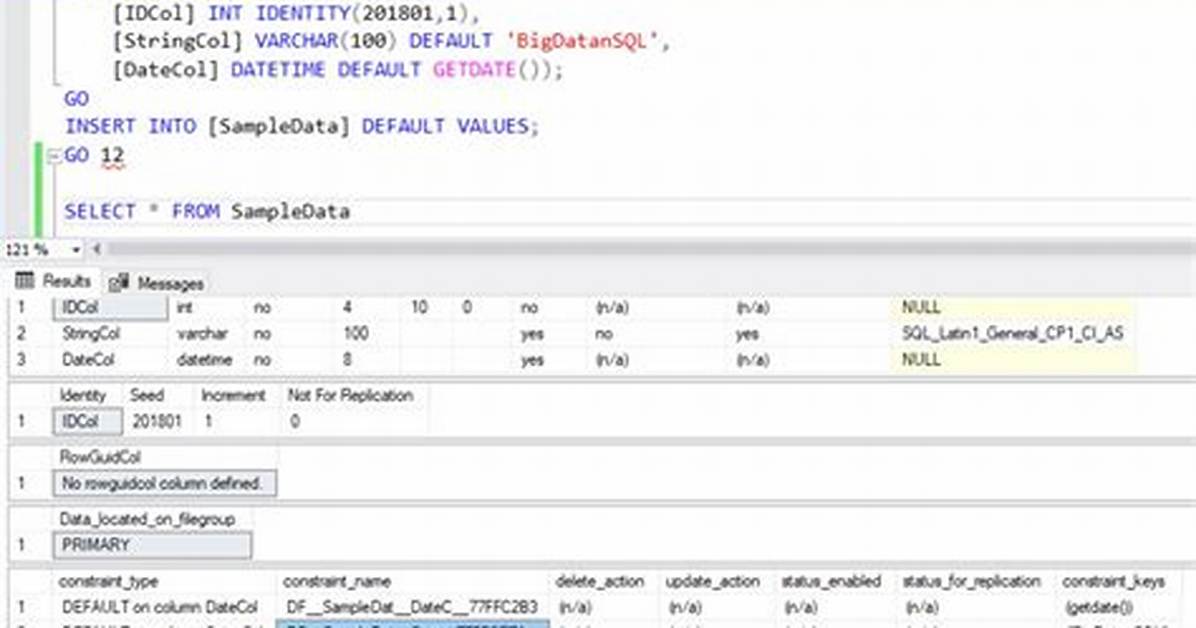
In the world of database management, handling date and time effectively is crucial for data integrity and accuracy. One of the important aspects of this is setting default values for datetime fields in SQL databases. When a new record is created, it is often necessary to automatically assign the current date and time to a datetime column if no specific value is provided. This process not only simplifies data entry but also ensures that the records are timestamped accurately, which can be vital for tracking changes over time or analyzing historical data.
Setting a datetime default value in SQL is straightforward, yet it can vary slightly depending on the database management system (DBMS) being used. For instance, MySQL, PostgreSQL, and SQL Server each have their own syntax and rules for implementing default values. Understanding these differences is essential for developers and database administrators who want to maintain consistency across their databases.
In this article, we will explore the concept of datetime default value SQL, including how to set it, when it is applicable, and best practices for ensuring your database is both efficient and reliable. Whether you are a beginner trying to grasp the basics or an experienced developer looking for advanced techniques, this guide will provide valuable insights into managing datetime values effectively.
What is a Datetime Default Value in SQL?
The datetime default value in SQL refers to an automatic timestamp assigned to a datetime column when a new record is inserted into a table without a specified value for that column. This feature is particularly useful for logging events or tracking changes, as it allows for consistent and accurate time records without requiring manual input.
How Does the Datetime Default Value Work?
When a table is created or modified, you can define a default value for the datetime column. If a new record is inserted without an explicit value for that column, the database will automatically use the default value. This process can be illustrated with the following steps:
- Create or modify a table to include a datetime column.
- Specify a default value using the appropriate syntax for your DBMS.
- Insert new records without providing a value for the datetime column.
- The database assigns the default datetime value automatically.
What Are the Benefits of Using Datetime Default Values?
Utilizing datetime default values in SQL offers numerous advantages, including:
- Data Integrity: Ensures that every record has a timestamp, allowing for better data analysis.
- Efficiency: Reduces the need for manual data entry, saving time and minimizing errors.
- Consistency: Standardizes datetime information across the database.
- Automation: Automatically handles timestamps, allowing developers to focus on other aspects of database management.
How to Set a Datetime Default Value in SQL?
Setting a default value for a datetime column can vary depending on the SQL dialect you are using. Below are examples for some popular database systems.
Setting Default Value in MySQL
In MySQL, you can specify a default value for a datetime column using the following syntax:
CREATE TABLE events ( id INT AUTO_INCREMENT PRIMARY KEY, event_name VARCHAR(255) NOT NULL, event_date DATETIME DEFAULT CURRENT_TIMESTAMP );In this example, if no value is provided for the event_date column during insertion, the current timestamp will be used automatically.
Setting Default Value in PostgreSQL
In PostgreSQL, you can set a default value similarly, but the syntax may include the now() function:
CREATE TABLE events ( id SERIAL PRIMARY KEY, event_name VARCHAR(255) NOT NULL, event_date TIMESTAMP DEFAULT now() );Setting Default Value in SQL Server
In SQL Server, the approach is slightly different, using the GETDATE() function:
CREATE TABLE events ( id INT PRIMARY KEY IDENTITY(1,1), event_name NVARCHAR(255) NOT NULL, event_date DATETIME DEFAULT GETDATE() );
