The Order of Mass is a fundamental aspect of the Catholic Church's liturgical practice. It serves as the framework for the celebration of the Eucharist, the central act of worship for Catholics worldwide. This guide aims to provide an in-depth understanding of the Order of Mass, its significance, and the various components that make up this sacred ceremony.
As we explore the intricacies of the Order of Mass, we will delve into its historical context, its structure, and the roles of various participants during the liturgy. Whether you are a lifelong Catholic seeking to deepen your understanding or a newcomer curious about Catholic traditions, this article will provide valuable insights into the Order of Mass.
In this comprehensive guide, we will also highlight the importance of the Eucharist in the life of the Church and its significance in the spiritual journey of believers. By the end of this article, you will have a clearer understanding of the Order of Mass and its profound meaning in the Catholic faith.
1. History of the Order of Mass
The Order of Mass has evolved over centuries, with its roots tracing back to the early Christian community. Initially, the Eucharistic celebration was a simple meal shared among believers, reflecting the Last Supper of Jesus Christ. As the Church grew, the liturgy became more formalized, leading to the establishment of the Order of Mass as we know it today.
During the Middle Ages, various liturgical texts were developed, and the Mass began to incorporate elements such as the use of Latin, the incorporation of specific prayers, and the introduction of rituals that emphasized the solemnity of the Eucharist. The Council of Trent (1545-1563) further solidified the structure of the Mass, leading to the Roman Missal's publication, which standardized the liturgy across the Catholic Church.
In the 20th century, the Second Vatican Council (1962-1965) brought significant changes to the Order of Mass, allowing for the use of vernacular languages and encouraging active participation from the laity. This transformation aimed to make the liturgy more accessible and engaging for the faithful, reflecting the Church's commitment to inclusivity.
2. Structure of the Order of Mass
The Order of Mass consists of several distinct parts, each serving a specific purpose in the celebration of the Eucharist. Understanding this structure is essential for appreciating the significance of each component.
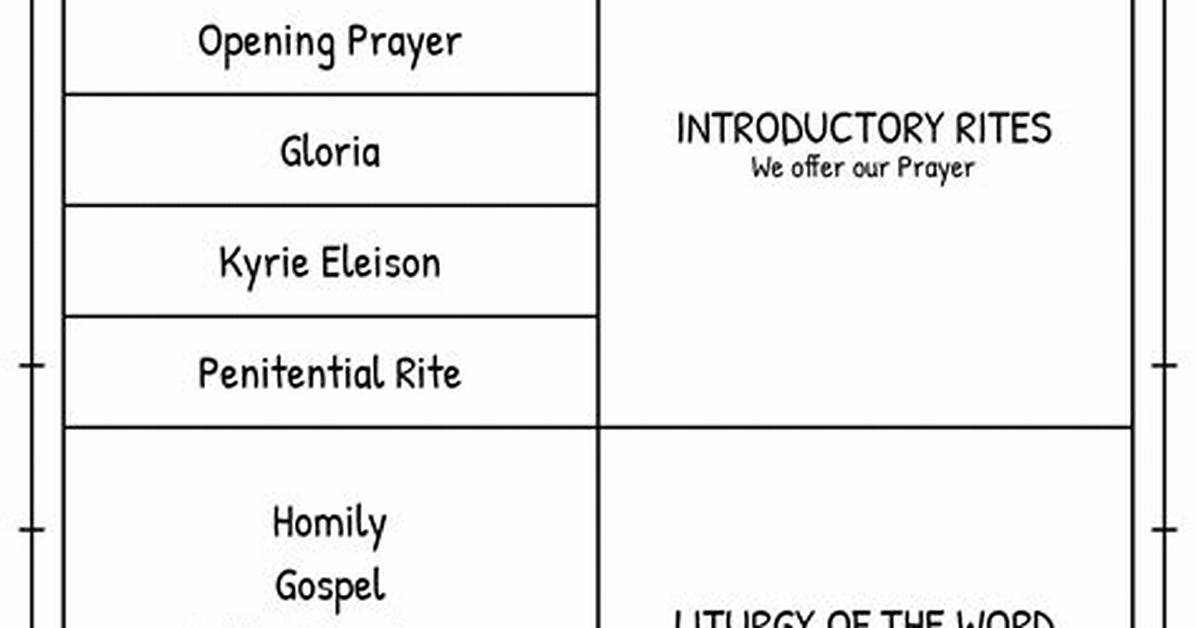
2.1 Introductory Rites
The Introductory Rites set the tone for the Mass and prepare the congregation for worship. They typically include:
- Entrance Chant
- Greeting
- Penance Rite
- Gloria
- Collect
2.2 Liturgy of the Word
The Liturgy of the Word is a time for listening to Scripture readings, which are central to the Mass. This section includes:
- First Reading
- Responsorial Psalm
- Second Reading
- Gospel Acclamation
- Gospel Reading
- Homily
- Profession of Faith
- Prayer of the Faithful
2.3 Liturgy of the Eucharist
The Liturgy of the Eucharist is the heart of the Mass, where the bread and wine become the Body and Blood of Christ. This part includes:
- Preparation of the Gifts
- Eucharistic Prayer
- Communion Rite
2.4 Concluding Rites
The Concluding Rites send the congregation forth to live out the message of the Gospel. They consist of:
- Final Blessing
- Dismissal

